Jensen Huang
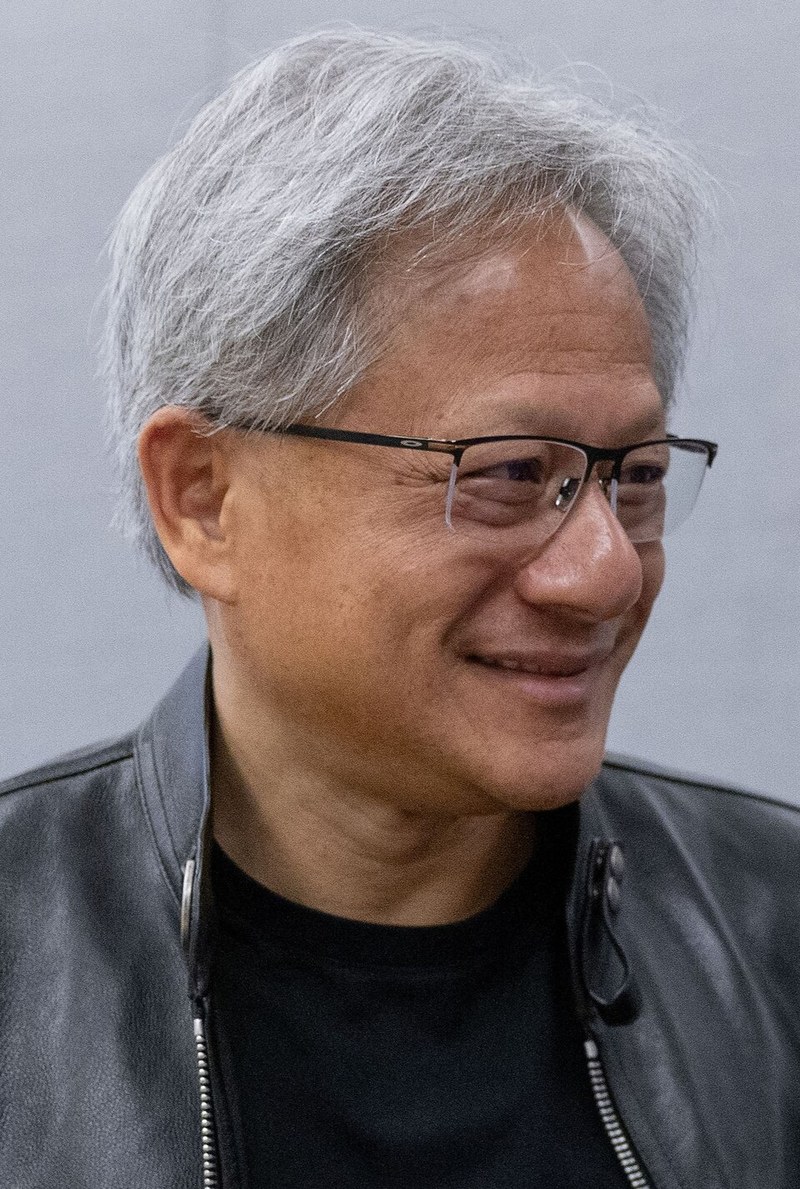
Introduction
Jensen Huang, 63, is the founder, president and CEO of Nvidia, the $4.5 trillion chipmaker whose processors power the global AI race. On November 8, 2026, Huang admitted to Nvidia employees that he had been unfaithful to his wife, and the company’s board announced an independent investigation into reporting that he had been the “target of a foreign intelligence effort” by Alice Huang, a Megaspeed executive whom US intelligence officials suspect was recruited by China’s Ministry of State Security. A proposed shareholder class action now accuses Huang and the company of defrauding investors by concealing it all. On November 10 the board retained Joon Kim — the former federal prosecutor who investigated Governor Andrew Cuomo — and his firm Wachtell, Lipton, Rosen & Katz to lead that inquiry, and a fresh report tied Alice Huang to a network alleged to have funneled some $7.5 billion in Nvidia chips into China.
Background Information
Born in Taipei in 1963 to Taiwanese immigrants, Huang moved to the US as a child, earned a master’s degree from Stanford, and started Nvidia in 1993 — famously from a Denny’s in San Jose. He has led the company as president and CEO since its founding. He married Lori Mills in 1985, and they have two adult children, Spencer and Madison. Huang was named one of Time’s “Architects of AI” as 2025 Person of the Year and in 2026 was appointed by President Trump to the President’s Council of Advisors on Science and Technology.
The Controversy or Incident That Led to Their Cancellation
Admitted an affair; under an independent board investigation — led by former prosecutor Joon Kim — and a shareholder securities-fraud class action over a suspected foreign-intelligence operation. Huang has not been charged and no finding says secrets were compromised. The board states it has confidence in him, he has committed to cooperating, and Nvidia says he will remain CEO during the inquiry.
The story built in stages. On October 29, 2026, the New York Times reported that US intelligence had assessed that Alice Huang — an executive at Singapore-based data-center company Megaspeed, who had developed a “close relationship” with Jensen Huang (the two are not related) — was gathering information for Beijing. A Nvidia spokesperson responded that Huang “talks with thousands of customer executives every year” and that his interactions with Ms. Huang were “not unusual or unexpected”; China’s foreign ministry called the reports “baseless and purely slanderous smears against China.”
On November 5, the Republican chairs of three House committees asked Huang to appear for a joint closed-door briefing. On November 6, the Financial Times reported that US officials had written a memo earlier in the year — overseen, per the Times, by Secretary of State Marco Rubio — stating Huang had been romantically involved with Alice Huang and that the intelligence community believes China’s MSS recruited her; the memo was shared with a small group of top officials shortly before Trump flew to Beijing for a summit with Xi Jinping, and was reportedly based on electronic surveillance of Alice Huang, according to the Times. The Post reported the pair were pictured together at a Taipei bar in 2024.
Megaspeed, which the Post reports purchased billions of dollars of Nvidia chips and which was spun off from a Chinese gaming company in 2023, is separately under US scrutiny for allegedly helping smuggle advanced Nvidia GPUs into China in violation of export controls; Nvidia previously ran an internal probe of those allegations and assessed there was no evidence of wrongdoing. Huang personally lobbied President Trump to loosen chip-export restrictions to China and remained a highly influential voice in the administration’s AI policy even after the memo circulated, according to the Post and FT.
A November 10 report in The Information, cited by the Post, alleged that Alice Huang leveraged her connections to help funnel at least $7.5 billion in Nvidia chips into China through a network of family-linked companies — some 240,000 of them chips subject to US export restrictions. Corporate records tie her sister, Huang Yu, to Shanghai Century Litong, which secured preferred Nvidia cloud-partner status by October 2023 as Washington tightened controls on advanced AI processors; Century Litong denied any business dealings with Alice Huang, saying it secured its partner credentials “through its professional expertise and compliant channels.” Bloomberg’s companion reporting put Megaspeed’s Nvidia imports at at least $4.6 billion from 2023 through November 2025 and tied Chinese AI startup Moonshot to a financing contract for 32 servers equipped with Nvidia’s B300 processors — machines valued at roughly $64.8 million listed as located in China; Moonshot disputed the documents’ accuracy and denied participating in or authorizing the financing arrangements. According to the report, Alice Huang sought to bolster her credibility by showing associates photographs of herself with Jensen Huang, claimed he marked her birthday each year with dinner or gifts, and said her “contacts at Nvidia and its distributors” could secure restricted hardware when orders ran into supply problems; the report did not establish when the two first met or that Jensen Huang knowingly participated in any violation of US export controls. Nvidia defended its oversight, telling The Information its due diligence “has helped identify suspected attempts to circumvent US export controls, leading to federal prosecutions.”
On November 8, Huang admitted the affair to employees — “I was unfaithful to my wife,” he said, per reports. “My actions hurt her and our children. There is no excuse for what I did. I am deeply sorry.” The same day, the Nvidia board announced it was initiating an independent investigation into whether its founder and CEO had been “the target of a foreign intelligence effort,” conducted by a committee of independent directors assisted by outside independent counsel. “While the Board has no reason to believe that either national security or NVIDIA secrets were compromised,” the statement read, “the Board’s inquiry will examine all available information.” The board said it has confidence in Huang and his leadership team.
On November 10, Nvidia named the investigator: Joon Kim, a partner at Wachtell, Lipton, Rosen & Katz and a former acting US attorney for the Southern District of New York from March 2017 to January 2018 — briefly succeeding Preet Bharara, whose seat he took over after President Trump fired him — was retained along with his firm to conduct the independent investigation into whether Huang was targeted by a foreign intelligence operation. Kim was one of two attorneys appointed by New York Attorney General Letitia James in 2021 to investigate the sexual-harassment allegations against Governor Andrew Cuomo, working alongside employment lawyer Anne Clark on the inquiry that concluded Cuomo had sexually harassed multiple women; Cuomo denied the allegations but resigned over the scandal. Wachtell also conducted the NBA investigation that found the Los Angeles Clippers violated salary-cap rules by arranging lucrative endorsement deals for Kawhi Leonard through companies doing business with the team — findings that cost the Clippers a $30 million fine, five first-round draft picks and a one-year suspension of owner Steve Ballmer, though the team disputed them. Nvidia said Huang will remain CEO during the investigation and did not participate in selecting the outside counsel.
The appointment puts the veteran prosecutor at the center of a scandal that has raised questions about how independent Huang’s own board can be. Its ten directors have served a combined 161 years, several with longstanding business ties to the founder: early investors Mark Stevens and Tench Coxe joined the board in 1993, the year Huang co-founded Nvidia — Stevens’ stake was valued at $6.22 billion when he last sold shares in September, and Coxe’s holdings were worth $5.62 billion when he last gave away shares in November, according to the Times. Three former employees told the newspaper that Huang viewed the board largely as a formality, relying little on its members to shape strategy, and he reportedly resisted internal discussions about succession planning, leaving Nvidia without an obvious replacement were its longtime CEO forced to step aside. “He didn’t like the idea,” Arm Holdings CEO Rene Haas, a former Nvidia executive, said in a 2024 interview cited by the Times. “He felt it would create competition among executives and be divisive.”
His Sunday email to staff, quoted at greater length by the Post the following day, opened with an apology to his family — “To my wife and family: I love you. I know an apology cannot undo what I have done. I hope our family will heal and that, over time, I can earn back your trust” — and told colleagues, board members, partners and shareholders that he had “fallen short” of his responsibilities and that they “deserve better.” “I am fully committed to NVIDIA and will work to earn back your confidence,” he wrote. The Post reported it remains unclear how long the affair lasted, and noted that China has denied Huang was targeted in a spying plot.
The story kept moving on November 9. Newly surfaced AFP footage showed Alice Huang gazing at the Nvidia boss and gently touching his arm at a Taipei restaurant on May 22, 2025, during Computex, Taiwan’s largest tech expo — a second documented meeting more than a year after the Taipei-bar pictures, and one that surfaced, per the Post, after an administration that knew of the relationship had still appointed Huang to the President’s Council of Advisors on Science and Technology earlier in 2026. The board’s Sunday statement had also emphasized that it “prioritizes US national and economic security, which is paramount to the interests of NVIDIA and its shareholders.”
Meanwhile the Post, citing Wall Street Journal reporting, detailed how little bench stands behind him: Huang — who reportedly says he does not believe in succession planning — runs a flat structure in which more than 60 executives report directly to him, and reportedly peppers staffers with hundreds of emails a day, messages employees have compared to “haikus and ransom notes.” He once told a close friend his dream was for one of his children to eventually run Nvidia: Madison, a senior director of product marketing focused on Omniverse who helps stage his presentations as part of the internal team known as “The Band,” and Spencer, described as “more soft-spoken,” who works in Nvidia’s robotics division; both earned more than $1.2 million in fiscal 2026.
The litigation arrived the same day. On Monday, November 9, Nvidia and Huang were sued in a proposed class action filed in federal court in San Jose five minutes after the stock market closed, accusing them of defrauding shareholders by concealing Huang’s ties with a suspected Chinese spy; the complaint says the defendants misled investors about Huang’s alleged affair with Alice Huang and did not disclose that the matter raised national-security concerns threatening Nvidia’s reputation and business prospects. The suit, led by shareholder Mark Kistenmacher, seeks unspecified damages; Nvidia did not immediately respond to a request for comment.
The marriage beat followed the money. September securities filings show Huang has placed roughly 670 million Nvidia shares — about 70 million held directly, the rest in the couple’s living trust and six LLCs — into family-wealth arrangements, with another 140 million shares in two irrevocable trusts. California divorce lawyers told the Post that his wife of more than 40 years, Lori Huang, whom he met as a teenager in an Oregon State electrical engineering class, could claim roughly half of those 670 million shares — about 335 million, worth some $60 billion — because the state’s no-fault community-property regime renders evidence of infidelity inadmissible: “She would be entitled to 50%,” said Christopher Melcher, while Robert Farzad put “the odds of them having a prenup” as “very low.”
A November 10 Post timeline reconstructed how close that access ran to the president himself. It counted at least three documented meetings between Trump and Huang after which the administration responded with policy changes that made it easier for Nvidia to sell advanced chips to China — including Huang’s April 2025 appearance at a $1 million-per-person Mar-a-Lago dinner, where he pushed to lift chip restrictions that had just been imposed — and noted his $25 million donation to the president’s ballroom project, the Alaska trip on which he boarded Air Force One alone carrying only a backpack, and the National Medal of Science Trump awarded him the month before the scandal broke. The access came with personal perks: when Huang’s invitation to the September state dinner for King Charles arrived without a plus one, he called Trump and made a personal appeal that got Lori Huang onto the list — bumping a senior administration official to make room, multiple administration sources told the Post — and Secretary of State Marco Rubio had pushed back on letting Huang attend the Xi dinner at all. A source familiar with the case went further, claiming “the White House has known how suspicious Ms. Huang, and her corporate network, is since last summer” and that “Jensen has repeatedly lied about his relationship with Ms. Huang” — anonymous assertions the piece reported alongside the Chinese government’s denial of any honeypot scheme and Megaspeed’s denial of wrongdoing.
Public Reaction and Consequences
The admission and the probe landed amid bipartisan congressional scrutiny. Senator Chris Coons, in line to chair the Senate Foreign Relations Committee in January, pledged an investigation into what he called the “insane relationship between the Trump Administration, Chinese spies, and AI billionaires,” writing “Congress will investigate and get answers.” CNBC reported lawmakers from both parties ramping up calls for investigations, with the three House chairs pressing for Huang’s November 18 briefing on his China ties and Nvidia’s security protocols.
The affair has also reignited the fight over AI export policy itself, pitting China hawks against warnings that an overreaction would play into Beijing’s hands. House Minority Leader Hakeem Jeffries said he “strongly supports” adding tougher chip controls to the year-end defense spending bill, Senators Jim Banks and Elizabeth Warren called for legislation targeting “various pathways through which China accesses advanced chips,” and a Senate Democratic aide told the Post, “This is not, at this point, a partisan mud fight. This is bipartisan… We are in a bipartisan gathering phase.” A source close to the situation cautioned that ousting Huang would be a “massive earthquake” at a fragile moment for the AI sector, and that closing the Southeast Asia remote-access loophole — the pathway US officials suspect Megaspeed and Alice Huang exploited to move chips to China — “will just drive those foreign clouds to Huawei.” Bloomberg, cited by the Post, reported Nvidia general counsel Tim Teter personally called Commerce undersecretary Jeffrey Kessler in the summer of 2025 to ask about the department’s investigation into Megaspeed, after which Commerce staffers were “muzzled in their ability to look into the company”; the Bureau of Industry and Security responded that it “conducts all enforcement strictly by the book.” Futurum Group CEO Daniel Newman drew the line the board may ultimately face: “is he a CEO that committed infidelity? I think he can survive that,” he said — “all the risks around intelligence stuff is not survivable. If any line was crossed beyond him just having an affair, the board is going to have to move.”
US national-security officials have privately expressed frustration at Huang’s access and lobbying on export policy, the FT reported; the Post noted he had argued against tight export controls while remaining influential in Trump’s orbit — including a January push that cleared the way for advanced-chip sales to China, an Alaska rendezvous with the presidential jet, and a seat at the September state dinner for Xi. The Post framed Huang alongside other Americans targeted by Chinese honeypot operations, a comparison readers will recognize from the Swalwell episode. President Trump publicly defended Huang on Sunday night, calling him an “honorable guy” and a “fine person” who has “done an amazing job for our country” — “I haven’t heard that he’s done anything wrong,” Trump told reporters. “He dealt with somebody but, you know, so does everybody else.”
The fallout reached Nvidia’s share price on Monday morning: the stock fell nearly 5% in morning trading, last changing hands down 4.9% at $177.48 a share, and closed down 4.3% on the day — a slide that erased roughly $190 billion of market capitalization, per the lawsuit report. The Post reported that part of the board’s investigation will examine whether Huang intentionally misled shareholders and the board about the relationship and whether what he concealed would have affected the company’s value — fueling fears the longtime executive could be ousted. Former SEC chair Gary Gensler, speaking on CNBC’s “Squawk Box,” said “it does look like it was material to pricing because look what is happening to stock prices” and warned “the board is going to have a hard challenge here. They’ll have some tough choices.” Tech analyst Dan Ives dismissed talk of replacing Huang as “comedy” — “you’re talking about what I would view as the torchbearer — the leader of AI technology” — while acknowledging that “given the board investigation, anything could happen and that creates a huge uncertainty.” Disentangling Huang from the company would be difficult: he manages roughly 60 direct reports, and his children Madison and Spencer and Madison’s husband Nico Caprez all work at Nvidia.
The succession question itself became the story’s second act. Nvidia has no publicly known succession plan for its irreplaceable CEO, and economist Mohamed El-Erian wrote on X that “the so-called ‘key-man risk’ looms large here, and it’s doubtful markets have adequately priced that in” — “this will not be easy for the board to navigate.” Ives, who had dismissed replacement talk as “comedy,” told clients in a new note that “Jensen is not replaceable… there is no other person on the management team bench that can step in seamlessly as CEO” and that there is “clearly risk” Huang could be removed as the investigation runs — a dynamic, he wrote, that investors “will factor this dynamic to the stock.”
Trump’s defense escalated into direct intervention on Monday: the president said he called Huang “just to see if he’s feeling all right” after the admission — “He said he had absolutely no idea that the person in question was a spy. I asked him that question. Did you have any idea that she was a spy? He said I had no idea that she was a spy, and I really believe him” — and a source close to the two men told the Post the president and the Nvidia CEO “have become good friends.” By Monday evening Trump had gone further, saying “I know the FBI is looking into it” while predicting the CEO would be in good shape — “I think that he’ll be in good shape,” he said, expressing confidence that nothing criminal would be found. Trump, who said he was “amazed” by the affair admission because he sees Huang “as a very high quality person,” declined to say when he first learned of the relationship, insisting he was unaware of it when Huang accompanied him to China in May alongside other tech CEOs: “No, I didn’t hear about it then.” The New York Times, per the Post’s account, had reported that Trump was briefed on the relationship and warned Alice Huang was providing information to the Chinese government but chose not to act; China’s foreign ministry spokesperson Guo Jiakun repeated the government’s denial on Monday, calling the spy allegation “unsubstantiated” and “nothing but a smear against China.”
Current Status
Huang remains Nvidia’s CEO; the board’s statement retains confidence in him, and he has “fully supported the review” and committed to cooperating. The independent investigation is ongoing, with no findings announced as of November 10, 2026 — and its scope now includes, per the Post, whether Huang intentionally misled shareholders and the board. Investors marked the scandal down on Monday — the shares closed down 4.3%, roughly $190 billion of market value — and shareholders followed the slide with a proposed securities-fraud class action that remains pending; lawsuits of this kind routinely follow unexpected share-price declines and are unadjudicated allegations. Trump, who had initially said he had not yet spoken to the CEO (“I think he probably has an excuse for it. You have to hear it”), said later Monday that he had now called Huang, who told him “he had absolutely no idea that the person in question was a spy” — “and I really believe him.” Trump now says the FBI is “looking into” the affair, though he predicted nothing criminal would be found; the FBI itself has not publicly confirmed any investigation. Neither the board nor the reports cited here say whether anything was actually passed to Beijing; Alice Huang could not be reached for comment, and Nvidia has declined to comment on the memo while maintaining no sensitive information was shared. Huang is due to brief three House committees in closed session on November 18, the day after Nvidia’s third-quarter earnings call. The inquiry now has a named leader: Nvidia said Tuesday it retained Joon Kim and Wachtell, Lipton, Rosen & Katz to conduct the independent investigation, with Huang staying on as CEO and taking no part in selecting the outside counsel.
Impact on Their Career/Life
The scandal fuses two of Huang’s defining roles — the world’s most powerful chip executive and one of Trump’s closest AI advisers — with a counterintelligence concern, putting his political access and Nvidia’s China business under simultaneous scrutiny. An admitted affair with an executive his own board is investigating over foreign-intelligence targeting has now cost Nvidia roughly $190 billion of market value in a single session, drawn a shareholder fraud suit, and exposed a personal fortune of some $150 billion to a potential no-fault divorce claim — leaving Nvidia’s succession-proof leadership structure, and the company’s stewardship of AI’s most strategic technology, newly in question.
Sources
- New York Post, “Nvidia CEO faces probe over affair with alleged Chinese spy — as Rubio memo warned about her months ago,” November 8, 2026. source
- New York Post, “Nvidia falls 5% over probe into CEO Jensen Huang’s affair with alleged Chinese spy,” November 9, 2026. source
- New York Post, “Nvidia CEO Jensen Huang has no obvious successor as Chinese ‘spy’ affair puts job at risk,” November 9, 2026. source
- New York Post, “Chinese ‘spy’ Alice Huang stares longingly at Nvidia boss, affectionately clasps arm in resurfaced pics,” November 9, 2026. source
- New York Post, “Nvidia, CEO Jensen Huang hid affair to suspected Chinese spy: shareholder lawsuit,” November 9, 2026. source
- New York Post, “What Jensen Huang’s affair with suspected spy could mean for his marriage — and $150B fortune,” November 9, 2026. source
- New York Post, “Jensen Huang lobbied ‘very good friend’ Trump for more chip sales to China while caught in Beijing’s honeytrap,” November 10, 2026. source
- New York Post, “FBI is ’looking into’ Nvidia boss Jensen Huang’s affair with suspected Chinese spy, Trump says,” November 10, 2026. source
- Financial Times, “US believes Nvidia’s Huang had romantic relationship with alleged Chinese spy,” November 6, 2026. source
- NVIDIA Newsroom, “Statement from NVIDIA Board of Directors,” November 8, 2026. source
- Axios, “Nvidia CEO Jensen Huang admits affair, board to launch investigation,” November 8, 2026. source
- CNBC, “Nvidia CEO Jensen Huang faces bipartisan congressional scrutiny over reported China spy link,” November 8, 2026. source
- ABC7 News/KGO, “Nvidia denies report CEO was allegedly targeted in Chinese spy plot,” October–November 2026. source
- New York Post, “Nvidia taps lawyer who investigated Andrew Cuomo to probe Jensen Huang’s Chinese ‘spy’ scandal as board faces scrutiny,” November 10, 2026. source
- @nypost trigger tweet (Joon Kim retention), November 10, 2026. source
- New York Post, “Jensen Huang’s ties to suspected Chinese spy helped fuel $7.5B in Nvidia chip sales to China: report,” November 10, 2026. source
- New York Post, “Nvidia CEO Jensen Huang’s ‘spy’ affair could spark Congress crackdown on AI export controls: ‘Massive earthquake’,” November 10, 2026. source