Michael Meiser
Introduction
Michael Meiser is a 40-year-old former Los Angeles County Sheriff’s Department deputy from Lancaster, California, who used his job at a county jail to run narcotics in — for cash. According to his plea agreement, Meiser agreed with inmates at the North County Correctional Facility in Castaic to smuggle drugs inside the jail, and on the day of the smuggling he collected two Pringles potato-chip cans loaded with roughly 511 grams — more than a pound — of heroin, along with $15,000 in cash, from associates at a gas station and stashed both inside a Sheriff’s Department radio car at the facility. On November 5, 2026, U.S. District Judge Fernando M. Olguin sentenced him to 67 months in federal prison for possession with intent to distribute heroin — three months shy of what federal prosecutors recommended and seven months above the five-year mandatory minimum Meiser had requested.
Background Information
Meiser was working as an LASD deputy at the North County Correctional Facility in Castaic, in the Santa Clarita Valley, when the scheme was set in motion in April 2024. The jail — a maximum-security facility within the Peter J. Pitchess Detention Center complex, about 40 miles northwest of downtown Los Angeles — was where Meiser served in an intelligence and investigative unit that monitored gang activity. Federal prosecutors said he was considered a trusted officer in the Sheriff’s Department’s Operation Safe Jails, the effort tasked with eradicating narcotics from the county’s jails, and had a “front-row seat” to the overdose epidemic behind its walls. According to his own sentencing memo, Meiser befriended inmate “shotcallers” whom jail higher-ups occasionally worked with to tamp down violence, began doing those inmates favors, and consented to smuggling for them when he found himself in financial trouble with a recently purchased home. The FBI investigated the case with assistance from LASD’s Internal Criminal Investigations Bureau, and Assistant U.S. Attorney Kathy Yu prosecuted the sentencing case.
The Controversy or Incident That Led to Their Cancellation
Convicted and sentenced. Michael Meiser pleaded guilty in July 2025 to possession with intent to distribute heroin, admitting he agreed with inmates to smuggle narcotics into the jail where he worked, and was sentenced to 67 months in federal prison on November 5, 2026. State charges remain pending against him in Los Angeles County Superior Court.
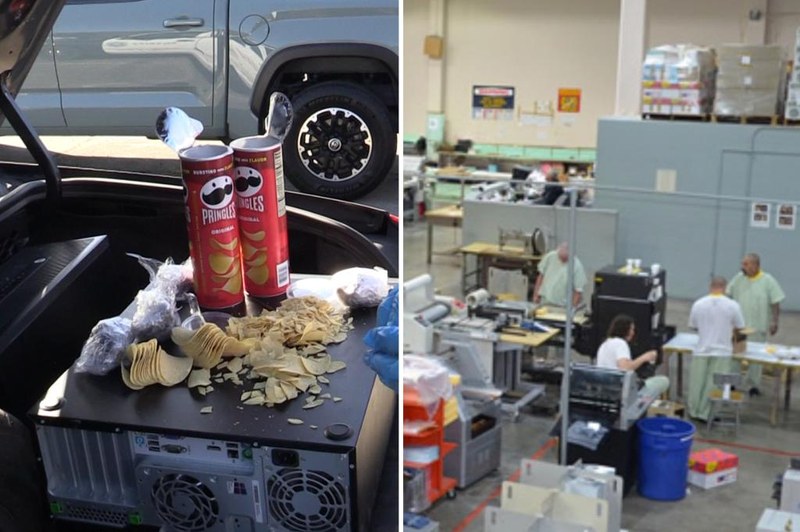
The smuggling operation ran on small digital payments and a gas-station handoff. On April 24, 2024, one of Meiser’s relatives received $1,500 via Cash App from an individual connected to an inmate and later informed Meiser. Six days later, Meiser drove his BMW to a Chevron gasoline station in Valencia, parked next to a Chevrolet SUV with two women inside — one of them associated with a jail inmate — and accepted a plastic grocery bag from the driver’s side. The bag held two Pringles cans loaded with approximately 511 grams, or 1.1 pounds, of heroin, plus two white envelopes containing a total of $15,000 in cash: the inmates’ payment for the smuggling. Sheriff’s officials told the Los Angeles Times the heroin was worth about $226,000 inside the jail, where inmates sell it in tiny smears called “papers.”
What followed was a route only a deputy could drive. Meiser put the grocery bag into his green backpack — which also held his loaded handgun — and drove to a fellow LASD deputy’s apartment complex, then rode with that deputy to the North County Correctional Facility, passing the jail’s initial security checkpoint in the truck. Inside the lot, he moved the backpack into the trunk of an LASD radio car and hid the two heroin-filled Pringles cans under computer towers in the trunk, keeping the $15,000 in the backpack. He visited the jail gym with the other deputy and met with an inmate participating in the scheme, speaking with him for several minutes. At the end of the day, as the other deputy drove the truck out of the jail, LASD investigators stopped the vehicle, arrested Meiser, and found the green backpack — $15,000 in cash, his loaded handgun, his badge, and his LASD identification — while a search of the radio car’s trunk turned up the two heroin-containing Pringles cans.
The Los Angeles Times, citing the investigative report, traced how the case broke: in February 2024, investigators learned how close Meiser had become with inmates through a series of jail phone calls placed by Jose Rodriguez, described as a reputed gang member and shot caller at the facility, and his alleged right-hand man, Jackie Triplett. Triplett spoke with a woman who said she had bought “white Jordans” and “black Jordans” — coded language investigators decoded as methamphetamine and heroin; the next day Meiser was shown on jail surveillance handing Triplett a bag and bedroll, and that night Triplett called the woman to say it was his “time to shine.” Two months later, an inmate read a string of numbers over a recorded call that investigators decoded as a request for Pringles; the next day, internal affairs detectives obtained a warrant to place a tracking device on Meiser’s BMW, and were tailing him when he drove to the Valencia handoff.
Public Reaction and Consequences
Meiser’s arrest landed inside a broader cleanup: the Santa Clarita Valley Signal reported it was part of a joint, widespread prosecution of drug smuggling in Los Angeles County jails by the L.A. County District Attorney’s Office and the Department of Justice that named dozens of defendants. At sentencing, federal prosecutors laid out detail that reached past the smuggling itself — the U.S. Attorney’s Office noted Meiser had been a trusted officer in Operation Safe Jails with a “front-row seat” to overdoses, and shared texts between Meiser and other deputies who mocked the inmates who overdosed. The case also brought scrutiny on Meiser’s unit: an Internal Criminal Investigations Bureau report depicted the squad as one that seemed to acknowledge gang leaders wielded more authority over inmates than their jailers, and Meiser’s partner, in an internal affairs review, described being “on the same page” with inmate shot callers on overdoses and violence. No other deputies were implicated in the smuggling scheme itself. Meiser, meanwhile, asked for leniency in a letter to Judge Olguin saying he takes responsibility for his actions and is now the caretaker for his father, who has a progressing fatal disease; he requested the mandatory minimum.
Current Status
Meiser is a convicted federal felon serving a 67-month prison sentence imposed by Judge Olguin on November 5, 2026 — roughly five years and seven months, three months below the prosecution’s recommendation and seven months above the five-year mandatory minimum he had requested. At his July 2025 plea he had faced that five-year mandatory minimum and a statutory maximum of 40 years. A DOJ spokesman told the Signal that Meiser asked for and received Olguin’s permission to serve his federal time concurrent with any state time; state charges are still proceeding in L.A. County Superior Court, where a recent minute order indicated a “disposition,” or plea agreement, might be forthcoming. The federal conviction is final at the trial level through his guilty plea; no appeal has been reported, and the case record describes him as a former deputy.
Impact on Their Career/Life
Meiser traded a law-enforcement career for a 67-month federal sentence, and the ledger of the exchange is preserved in his plea agreement: $1,500 by Cash App to a relative, $15,000 in envelopes at a Chevron station, a pound of heroin moved in snack-food cans. A deputy once trusted inside the unit meant to keep narcotics out of the county’s jails now enters federal prison at 40 for smuggling them in, with the sentence placing his release in his mid-40s and concurrent state time still to resolve. The case’s documented fallout reaches past him: prosecutors’ sentencing filings exposed deputies’ text messages mocking overdosing inmates, and the investigative report on his unit described a jail where gang leaders held more sway over inmates than their jailers — an institutional picture that outlasts Meiser’s own term and now stands in the public record as an LASD internal-corruption prosecution worked jointly by the FBI and the department’s own investigators.
Sources
- U.S. Attorney’s Office, Central District of California, “Former LASD Deputy Sentenced to More Than 5½ Years in Prison for Possessing Pringles Cans of Heroin Intended for Smuggling into Jail,” November 5, 2026. source
- U.S. Attorney’s Office, Central District of California, “Los Angeles County Sheriff’s Deputy Pleads Guilty to Heroin Possession, Admits to Attempting to Smuggle Drug into Jail,” July 10, 2025. source
- New York Post, “Former LA sheriff’s deputy sentenced for smuggling heroin in Pringles cans,” November 6, 2026. source
- Los Angeles Times, “Ex-L.A. County deputy who smuggled heroin into a jail in Pringles cans sentenced to prison,” November 6, 2026. source
- The Signal (Santa Clarita Valley), “Former deputy gets 67 months for smuggling heroin into jail,” November 2026. source
- CBS News Los Angeles, “Former LASD deputy sentenced to nearly 6 years in prison for attempted smuggling of Pringles cans of heroin,” November 5, 2026. source