Nikki Floris
Introduction
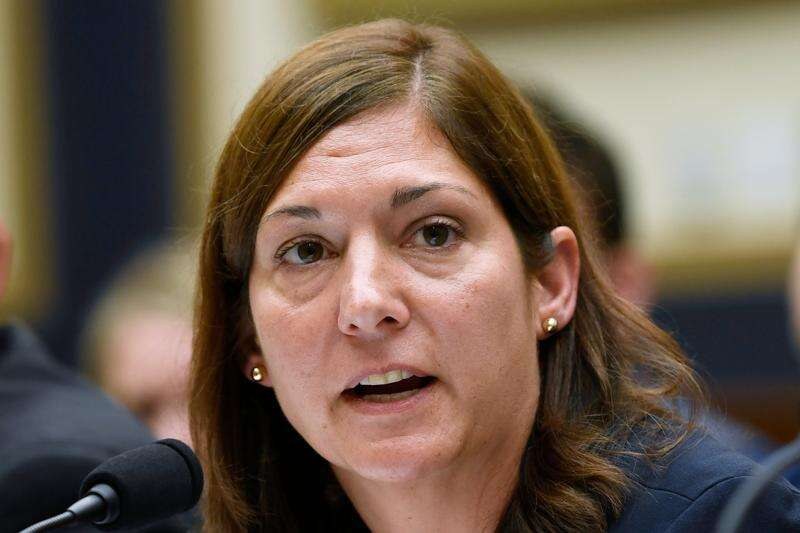
Nikki Cole Floris is a 46-year-old former senior FBI intelligence official from Alexandria, Virginia, who led the bureau’s Foreign Influence Task Force as a deputy assistant director from mid-2019 through mid-2022 and was charged on October 23, 2026, with lying to Congress about the task force’s role in the FBI’s Hunter Biden investigations. Floris — formerly an intelligence analyst in charge in the FBI’s Washington Field Office — self-surrendered on an arrest warrant Friday morning along with Bradley Benavides, 56, the task force’s former section chief, and each was charged with one count of making a false statement in a matter within the jurisdiction of Congress, an offense carrying up to five years in prison on conviction, according to DC US Attorney Jeanine Pirro and FBI Director Kash Patel . At the case’s first public hearing on October 27, Floris broke down in tears in the courthouse hallway during a break in the proceeding .
Background Information
Floris spent nearly two decades as an FBI intelligence officer, according to the statement from her own attorneys, and by 2019 was appearing before the House Judiciary Committee as the FBI’s Deputy Assistant Director for Counterterrorism. Her disputed assignment came leading the Foreign Influence Task Force, a since-disbanded unit set up to counter foreign election interference, from mid-2019 through mid-2022; Benavides, her co-defendant, served as the task force’s section chief from mid-2019 through the 2020 election. Both roles overlapped October 2020, when the New York Post publicized the contents of Hunter Biden’s laptop — a hard drive obtained from Rudy Giuliani that had been dropped off at a Delaware repair shop — injecting a charged storyline into the final weeks of the presidential race. CBS News, citing court records, also describes Floris as a former intelligence analyst in charge in the bureau’s Washington Field Office and Benavides as a former deputy assistant director in the Counterintelligence Division .
The Controversy or Incident That Led to Their Cancellation
Charged, not tried. The account below comes from criminal complaints, testimony at a preliminary hearing, and statements by the Justice Department, the FBI, and the defendants’ attorneys. The false-statement charges are accusations. Neither Floris nor Benavides has been tried, no plea is on record, and both are presumed innocent unless and until proven guilty.
The charges stem from transcribed interviews the two ex-officials gave the House Judiciary Committee in July and September 2023, according to a source familiar with the matter cited by the New York Post. According to the complaint, both told the committee the Foreign Influence Task Force was not involved in FBI investigations into Hunter Biden; Floris said she took part in no discussions about Hunter Biden while assigned to the task force, and Benavides said he first learned the FBI had Hunter Biden’s laptop from a Wikipedia article in 2023. Pirro said one of them claimed the bureau only learned about the laptop “from Wikipedia” despite evidence they helped shape the public narrative about it before the election .
Prosecutors allege the testimony was false. A statement of facts prepared by the FBI alleges Floris made her false statements on July 19, 2023, and Benavides did the same that September, and states there is probable cause to believe they lied “for the purpose of concealing” the task force’s engagement with and communications about the Hunter Biden investigations and impeding the congressional inquiry. The complaint alleges Hunter Biden was a recurring subject at task force meetings, that Floris discussed the investigations for more than a year, and that Benavides regularly discussed the laptop with FBI officials before the 2020 election. An FBI unit chief told investigators in October 2026 that both had oversight roles in the various Hunter Biden probes, CBS News reported. Patel put it more bluntly: “Both testified that the FITF was not involved in the Hunter Biden investigations. Documentary evidence, contemporaneous communications, and witness accounts contradict their testimony” .
The case returned to court on October 27 for a probable-cause hearing that turned into a public rebuke of the prosecution. Hours before the session, the Justice Department filed a superseding complaint after midnight seeking to add obstruction and attempted-obstruction charges; Magistrate Judge Zia Faruqui refused to bless it, struck the unsigned, unsworn document from the record, and noted it carried a signature block with his name typed out but no actual signature. “I am not going to bless it as a superseding complaint,” Faruqui said, demanding to know why prosecutors had “changed the entire history of how you charge cases” and saying their filing made it “look like the United States is afraid of me trying to find probable cause”; prosecutor John Borchert answered, “We are not afraid of a probable cause finding” . At the same hearing, prosecutors laid out their theory in more detail than the original complaint had: citing internal FBI messages, emails and bureau testimony, they allege Floris and Benavides discussed Hunter Biden and his laptop through the 2020 election’s final stretch and assisted with press inquiries after The Post’s October 14, 2020 laptop story, peddling what they call the false narrative that the laptop was Russian disinformation .
Public Reaction and Consequences
Floris’ attorneys — a group including Margaret Donovan — called the charges “nonsense” and politically timed: “Nikki Floris is a patriot. She served our nation as a dedicated FBI intelligence officer for nearly 20 years. Yet today, the DOJ has accused her falsely of a crime on the say-so of politicians, not on the facts,” the statement read. “It’s no coincidence the government is filing these nonsense charges now, years later, on the eve of an election.” Benavides’ attorney Ron Safer told the court the alleged conduct happened years ago and the government has had the information for years, pressing for a speedy hearing to contest the allegations. The Associated Press noted the case was filed 10 days before the November 3 midterms and lands amid FBI Director Patel’s backward-looking scrutiny of episodes from the bureau’s recent past; Patel himself said, “Lying to Congress by senior FBI officials strikes at the heart of our system. No one is above the law.” The Post reported that representatives for the pair could not immediately be reached for comment .
The October 27 hearing sharpened that fight. Floris’ legal team seized on the overnight filing — “What is going on at the D.C. U.S. Attorney’s Office?” they asked, calling it “an unsigned and unsworn complaint attempting to fix the issues with their original charge” that added “a new charge just as meritless as the first one,” saying that in “combined decades of DOJ service” they had never seen such a filing and accusing prosecutors of trying to “litigate this case in the media, rather than the courtroom”; their motion to strike called the document “a serious abuse of the criminal charging process” . Another of Floris’ attorneys, Mary Dohrmann, told the court “the evidence is mounting that this prosecution is about some political football, and not the law or the facts in this case” . FBI Special Agent Bryan Witt, the Kansas City case agent, conceded under cross-examination that he initially worried the assignment “would be viewed as political” and complained it was a “huge distraction,” and acknowledged on the stand that he had no direct evidence Benavides’ laptop testimony was intentionally false — while testifying that the claims were contradicted by “tangible” evidence such as chat logs and direct-message transcripts, and that it would be “common sense” to remember communications about the laptop before telling Congress otherwise. Donovan, pressing him on how the case reached his desk, drew out that Witt was assigned after Director Kash Patel sent the matter to Kansas City, days after President Trump named both ex-officials in a letter directing the FBI to open an investigation; Witt agreed the assignment was “unusual” but said he was instructed to investigate potential crimes, and declined Donovan’s invitation to call the case a “witch hunt” .
Current Status
As of October 28, 2026, Floris and Benavides — who were released after their Friday arrests, CBS reported — remain charged with one count each of making a false statement in a matter within the jurisdiction of Congress, and those original complaints are intact. The government’s attempt to add obstruction charges failed for now: Faruqui struck the superseding complaint from the record, the docket was updated to say the filings were entered “in error,” and he indicated any new charges would have to come the proper way — through a grand jury, he said, noting prosecutors generally must obtain an indictment within 30 days of an arrest. No probable-cause ruling had issued after a full day of October 27 testimony; the hearing was set to continue Wednesday, and no plea, trial date, or resolution had been reported in the coverage available as of this writing. The charges remain unadjudicated, and the underlying investigation is described as ongoing .
Impact on Their Career/Life
For Floris, the charge ends a career her attorneys describe as nearly twenty years of FBI intelligence service — an arc that ran from briefing Congress on counterterrorism in 2019 to standing before a magistrate as a criminal defendant. A false-statement conviction for testimony to Congress carries prison exposure, and the case revives the most politically explosive episode of the 2020 election at a moment when the Justice Department is openly re-litigating the FBI’s past conduct. The October 27 hearing added a second layer: the prosecution is now itself a story about prosecutorial conduct, after a federal magistrate publicly accused the Justice Department of breaking with charging norms and the defense’s political-timing claims were echoed from the bench. Floris’ own defense frames the case as retribution timed to an election calendar; the government’s framing, in Pirro’s words, is that the two used their positions to conceal the task force’s role and impede a congressional investigation. Either way, the case has already made her a central figure in the fight over the bureau’s institutional legacy .
Sources
- NY Post, “FBI officials who covered up Hunter Biden laptop charged with lying to Congress,” October 23, 2026 — source
- NY Post, “Ex-FBI official weeps as she appears in court to face charges of lying to Congress about Hunter Biden laptop,” October 27, 2026 — source
- CBS News, “2 ex-FBI officials charged with lying to Congress about Hunter Biden laptop probe,” October 23, 2026 — source
- CBS News, “Judge throws out new charges against ex-FBI officials in Hunter Biden case after DOJ’s midnight filing,” October 27, 2026 — source
- WJLA 7News, “Former FBI officials accused of lying to Congress in Hunter Biden investigation,” October 23, 2026 — source
- Associated Press (via The Journal), “2 ex-FBI intelligence officials are charged with lying about Hunter Biden’s laptop,” October 23, 2026 — source
- CNBC, “Two ex-FBI officials charged with allegedly lying about Hunter Biden probe: DOJ,” October 23, 2026 — source
- CNBC, “Judge blasts prosecutors in case against former FBI officials,” October 27, 2026 — source