Joseph Makhani
Introduction
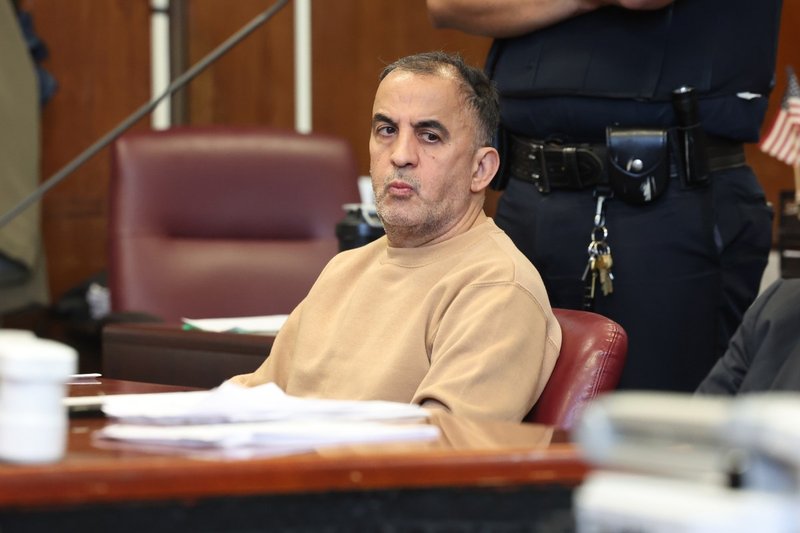
Joseph Makhani — a 63-year-old real-estate developer from Kings Point, Long Island — was sentenced in Manhattan Supreme Court on November 10, 2026 to up to 21 years in prison for stealing two Harlem brownstones from their rightful owners through a deed-theft scheme, including one wrested from an 83-year-old woman who ended up living in a homeless shelter while he collected rent on her home. A jury convicted Makhani at a seven-week trial over the summer on two counts of first-degree criminal possession of stolen property and one count of first-degree scheme to defraud, in a case brought by the New York Attorney General’s office; prosecutors had asked for seven-and-one-third to 22 years — “almost exactly what Makhani got,” per the New York Post. Justice Michele Rodney also fined him $500,000 and ordered $500,000 in restitution, due by May 2027.
Background Information
Deed theft — the forgery and fraudulent filing that strip homes from their owners on paper — disproportionately targets elderly homeowners and communities of color, and New York Attorney General Letitia James has made prosecuting it a signature effort, championing 2024 legislation that officially criminalized deed theft statewide and gave her office authority to pursue it. Makhani was a repeat player in that world long before the Harlem case: in 1999 he and his brother Kamran “Mike” Makhani pleaded guilty for their roles in a scheme involving foreclosed properties in Queens, receiving fines and three months in prison; nine years later, companies in which Joseph was a principal pleaded guilty to filing false deeds as part of a Queens housing scam and were fined $5,000 each, according to the New York Times. When Hunter College students making a documentary about predatory lending investigated his company, they faced legal threats, and Makhani was filmed answering a question about whether the firm’s name deceptively suggested a government agency with, “If the client is stupid, that’s not my problem.”
The Controversy or Incident That Led to Their Cancellation
Convicted; sentenced to up to 21 years. A Manhattan jury found Joseph Makhani guilty on July 1, 2026 of two counts of first-degree criminal possession of stolen property and one count of first-degree scheme to defraud for criminally possessing two Harlem brownstones — 107 West 118th Street and 135 West 131st Street — worth a combined $4.7 million, after a seven-week trial brought by the state Attorney General. On November 10, 2026, Justice Michele Rodney sentenced the 63-year-old to up to 21 years in prison, fined him $500,000, and ordered $500,000 in restitution by May 2027. His lawyer Susan Necheles called him “a good man who made a mistake” and said she expects to win on appeal.
The scheme, as proven at trial, began in 2012, when Makhani used fraudulent deeds, false documents and shell companies to take possession of 107 West 118th Street — a brownstone its owner, former corrections officer Veronica Palmer, had bought in 1985 and never wanted to sell. A Makhani-controlled corporation claimed in a filing to have paid just $10 for the property; in a mortgage application he falsely claimed to have paid $975,000, using the fiction to obtain a $650,000 construction loan, then refinanced into a $1.2 million long-term mortgage. He submitted a forged application to the city housing department to convert the building to market-rate rentals, and from 2016 to 2023 rented out its units for as much as $3,400 a month — more than $12,000 in monthly income — while Palmer, who was booted from her own home, received nothing and ended up at a Brownsville homeless shelter. The stolen home was valued at approximately $2.9 million in 2023.
The second brownstone, at 135 West 131st Street, was taken through the same paper trail: its last true recorded deed dated to 1975, held by an elderly owner who died soon after, and Makhani exploited the gap after a beneficiary’s death. Around 2012 he approached one of the building’s tenants, Tyrone Boozier, pretended to offer him a job, secured his signature and then filed a fraudulent deed misrepresenting Boozier as the owner so the property transferred to a Makhani-controlled company. When his ownership was questioned during a 2013 attempt to evict the building’s tenants, Makhani filed a new fraudulent deed claiming the last owner’s heirs had transferred the property. Boozier testified at the trial; the home was valued around $1.8 million in 2018.
The road to conviction ran through a decade of prosecution. James’s office indicted Makhani in 2021, but he beat that case on a technicality, and a state appellate court ruled in April that prosecutors could present the evidence to a new grand jury; he was indicted again in 2023. After the July 1, 2026 verdict — which the AG’s office announced with Makhani facing up to eight-and-one-third to 25 years on the top count — he was remanded into custody, and Necheles, who previously represented Donald Trump in the Stormy Daniels hush-money case, said, “We disagree with the jury verdict. Mr. Makhani was innocent of the charges and we expect to win on appeal.” At sentencing, prosecutor Matthew Luongo described Makhani as someone who viewed “people beneath him” and acted in a “callous and conniving” manner, and the AG’s office sought seven-and-one-third to 22 years — almost exactly what Rodney imposed.
Public Reaction and Consequences
James framed the conviction as a warning to the deed-theft trade: “Joseph Makhani maliciously targeted an elderly homeowner and shamelessly attempted to evict long-time tenants in a heartless scheme to steal two homes that never belonged to him in the first place,” she said after the verdict. “Today’s conviction should serve as a warning to all deed thieves: my office will hold you accountable to the full extent of the law.” A prosecutor told jurors during the trial that Makhani “ran a calculated, years-long scheme” and that the brownstones “were the perfect target. They were homes of the vulnerable, in disrepair.” The case sits inside a wider crackdown: in 2025, real-estate broker Stacie Saunders, a member of a five-person ring, drew three to nine years for stealing and selling three homes from elderly Queens owners, and in June 2026 a Queens man was charged with stealing the deed to a Brooklyn home from an elderly woman with dementia.
Current Status
Makhani is in custody serving a prison term of up to 21 years imposed on November 10, 2026, with a $500,000 fine and $500,000 in restitution to his victims due by May 2027. The convictions on his record are two counts of first-degree criminal possession of stolen property and one count of first-degree scheme to defraud. Necheles has said she expects to win on appeal; the AG’s office has not commented on the sentence, and no appeal filing is yet documented in coverage. Palmer, now 83, spent years in a homeless shelter while the scheme ran; the Post reported she testified at the trial about being scammed out of the home she had held since 1985.
Impact on Their Career/Life
A landlord whose companies had been convicting their way through New York courts since the 1990s finally met a jury that heard the whole pattern: forged deeds, shell companies, fake job offers, and a decade of rent collected on homes that were never his. At 63, Makhani trades a Long Island real-estate portfolio for a state prison cell of up to 21 years, with half a million dollars in fines and restitution owed by 2027. For Harlem, the case became the emblem of the deed-theft epidemic James has prosecuted statewide — elderly owners stripped of generational wealth by paperwork — and his conviction was announced as proof the state will now pursue it as the crime it is.
Sources
- NY Post, “Deed-theft fraudster who cheated poor 83-year-old woman out of NYC brownstone learns his fate,” Nov 10, 2026 — source
- New York Attorney General Letitia James, “Attorney General James Wins Case Against Notorious Deed Thief Joseph Makhani,” Jul 1, 2026 — source
- The Real Deal, “Long Island man convicted in $4.7M Harlem deed theft scheme,” Jul 2, 2026 — source
- The Root, “Letitia James Stops Man from Stealing Harlem Homeowner’s Deeds,” Jul 12, 2026 — source