Paul Mackenzie
Introduction
Paul Mackenzie is a Kenyan doomsday cult leader and former taxi driver who founded the Good News International Church, was convicted on October 19, 2026, of murdering 190 children and one adult in one of the worst cult-related disasters in recent history, and was sentenced on November 6, 2026, to an aggregate 200 years in prison. A judge in Mombasa found Mackenzie and 28 co-accused guilty after a judgment hearing lasting more than eight hours; at sentencing, Lady Justice Diana Kavedza Mochache ruled that the two halves of his sentence — 100 years per count for the starvation murders, 100 years per count for the direct homicides — would run consecutively. Prosecutors said his church ordered followers to starve themselves and their children to death to go to heaven before the world ended, and the court rejected his defense that he never forced anyone to starve. More than 400 bodies were eventually recovered from shallow graves in Kenya’s Shakahola Forest, where Mackenzie had moved his followers.
Background Information
Mackenzie established his so-called Good News International Church in 2003 and was alleged to have incited followers to starve themselves to death in order to “meet Jesus”. His doctrine held that education was forbidden and modern medicine was “evil”; his End Days sermons, broadcast on the church’s Times TV station from Malindi, described education as “evil”, healthcare as “against the doctrine” and digital identity cards as “the mark of the devil”. He had been on the radar of Kenyan authorities since 2017, when police searched his premises, and in 2019 authorities shut down his church, after which he relocated to the Shakahola Forest near the Kenyan coast with followers from across the country. His followers lived in makeshift homes of polythene sheeting and thatch in areas he divided with biblical names like Jerusalem and Judea, and he branded schools and hospitals Satanic, according to accounts some of his followers gave Reuters.
The Controversy or Incident That Led to Their Cancellation
Sentenced to 200 years. On October 19, 2026, the Mombasa High Court found Mackenzie and 28 co-accused guilty of murder over 191 deaths — 190 of them children — rejecting his defense that no one was forced to starve. On November 6, 2026, the same court sentenced him to an aggregate 200 years: 100 years per count for the 191 murders by starvation and 100 years per count for eight murders by direct homicide, the two sets running consecutively. The judge declined, despite finding the case met the threshold, to impose the death penalty — so that a living convict might still disclose where missing children are buried. Co-convicts received 10 to 160 years. He still faces terrorism, manslaughter, child-abuse and torture charges in two other courts, which he denies.
Prosecutors said Mackenzie’s Good News International Church organized a Christian doomsday sect that ordered followers to starve themselves and their children so they could go to heaven before the world ended. The BBC reported that Mackenzie’s followers believed he was “Jesus’s mouthpiece” and that his teaching promised starvation victims would “meet Jesus”. People with direct knowledge of the cult’s activities told Reuters the mass starvation was planned in three phases: children first, then women and young men, and finally the remaining men. Justice Diana Kavedza Mochache said in her judgment that in some cases children were isolated and denied food while their parents watched. One of his co-accused said Mackenzie had directed that anyone who “resisted the directive to fast must be forced to go to heaven through kicks and blows”.
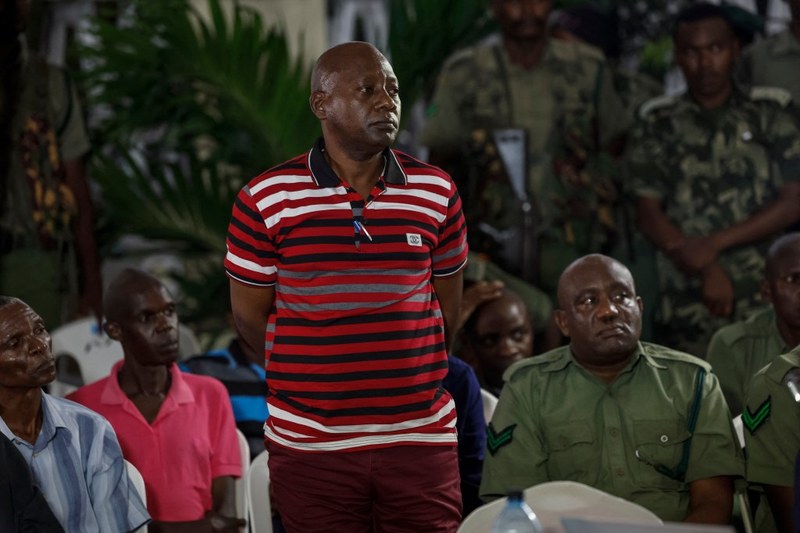
The cult’s plight emerged in mid-March 2023, when a local man told police his brother and wife had starved their children to death in the forest on Mackenzie’s orders. Mackenzie was arrested and released on bail — relatives said he then moved up the date on which he told followers the world would end — and he was arrested again in April 2023, after which police began combing the forest systematically and exhuming mass graves. More than 400 bodies were recovered from Shakahola, many so severely decomposed that only 26 could be identified at the time of the verdict, and the judgment covered 191 deaths while investigations into the others continue. Mackenzie sat in court in a striped polo shirt and red trousers alongside his wife, who is among the co-accused, and stood silently staring into space when his name was read.
The sentencing on November 6, 2026, closed the circle on the murder case. Justice Kavedza Mochache ruled that Mackenzie serve 100 years’ imprisonment for each of the 191 counts of murder by starvation — 190 child victims and one adult — concurrently with one another, and 100 years for each of eight counts of murder by direct homicide, with the two sets running consecutively for an aggregate of 200 years; at the sentencing she said 183 victims died of starvation and the other eight were classified as killed by direct homicide. She said Mackenzie bore the “primary criminal culpability” for relocating his followers and ordering them to fast to death, described the killings as “cold and calculated”, said the perpetrators showed no remorse and declared themselves ready to fast to death as well, and called the sentence “appropriate and just, to send an unmistakable message that such atrocities warrant the maximum penalties allowed by law”. During the hearing Mackenzie often smiled and chatted with his assistant pastor, Smart Mwakalama, who received 160 years; most co-convicts drew aggregate sentences of 160 years (ranging overall from 10 to 160 years by individual responsibility), some with an added three-year probation, and all convicts except Mackenzie were directed into assessment for a National Counter Terrorism Centre deradicalisation, disengagement and reintegration programme, with sentence-review eligibility tied to NCTC certification. The prosecution had argued for the death penalty for Mackenzie and life imprisonment for his accomplices; the judge declined, reasoning that capital punishment was reserved for exceptional cases, that a death sentence “will foreclose the possibility of disengagement and rehabilitation”, and that it “would also extinguish the possibility that a living convict may disclose the location of the remains of the missing children” — Kenya has not carried out an execution since 1987. Defense lawyer Lawrence Obonyo, who represents Mackenzie and several co-convicts, told the Associated Press he had already launched an appeal, arguing that sentences of between 160 and 200 years “amount to life sentences” that are “unattainable” in practice.
Public Reaction and Consequences
The verdict capped a case that has gripped Kenya since the mass graves were discovered more than three years ago and has driven calls for tougher oversight of churches and religious organizations in a country where religious faith plays a prominent role in public life. Francis Wanje, 62, who lost eight family members including two grandchildren to the cult, told Reuters before the verdict: “It has been really a heavy thing (for) us as a family, and it has really taken us very far in terms of psychological problems, … I was hoping for this particular day,” and told the BBC’s Newsday programme before the sentencing that he was hoping for “a sentence which will match his [Mackenzie’s] deeds in the forest”. Suleiman Ziro, a father of seven who traveled 75 miles for the sentencing after losing six of his children and his wife to the cult in 2023, said the sentence was not enough — especially as he has yet to recover his loved ones’ bodies — and called for the death penalty. Kenyan President William Ruto said in 2023 that government agencies should have been able to prevent the deaths and that he took responsibility as president; the gravity of the case prompted him to set up a commission of inquiry that was later declared unconstitutional, and state-funded KNCHR investigations found local administration and law-enforcement officials had repeatedly turned a blind eye to the cult. The BBC noted the October verdict was the first time Mackenzie had faced judgment on the most serious charges, and that 28 other leaders of his cult were convicted alongside him.
Current Status
As of November 6, 2026, Mackenzie has been sentenced to an aggregate 200 years in prison for the murders of 191 people, his defense has filed an appeal, and all those convicted were granted 14 days to file appeals. He remains in custody and still faces other charges over the forest deaths — terrorism and manslaughter counts covering the more than 200 other victims, plus child-abuse and torture charges in two other courts — all of which he has denied, and prosecutors allege that while in detention he directed the deaths of 52 more people in Kwa Binzaro village, a case in which he has pleaded not guilty. The remaining Shakahola deaths remain under investigation: while only 26 of the recovered bodies could be identified at the time of the October verdict, sentencing coverage reported that more than 60 have since been positively identified and reburied by their relatives, with many others still unidentified and unclaimed.
Impact on Their Career/Life
Mackenzie’s sentence converts a ministry that once operated openly — with branches in Nairobi and along the coast, a Times TV studio broadcasting his sermons from Malindi, and thousands of followers — into an adjudicated mass-murder record with an aggregate term of 200 years, an appeal already lodged, and terrorism, manslaughter, child-abuse and torture prosecutions still ahead of him in two other courts. The case has reshaped Kenya’s regulatory debate over religious organizations and forced an acknowledgment at the presidential level that state agencies failed to stop the deaths despite years of warnings. For the victims’ families, the sentence delivered retribution on paper but not closure: the judge’s own refusal of the death penalty rested partly on keeping convicts alive as potential sources of information about missing children’s remains, and parents like Suleiman Ziro left the courtroom still waiting for bodies to recover.
Sources
- NY Post, “Leader of Kenyan doomsday cult sentenced to 200 years in prison,” Nov 6, 2026 — source
- BBC News, “Shakahola deaths: Kenya doomsday cult leader Paul Mackenzie sentenced to 200 years in prison,” Nov 6, 2026 — source
- Kenyans.co.ke, “Paul Mackenzie Sentenced to 200 Years in Prison,” Nov 6, 2026 — source
- @nypost trigger tweet (sentencing), Nov 6, 2026 — source
- NY Post, “Kenyan doomsday cult leader and followers convicted of murdering 190 children in mass starvation,” Oct 19, 2026 — source
- BBC News, “Shakahola cult leader Paul Mackenzie guilty of 191 murder charges in Kenya,” Oct 19, 2026 — source
- Reuters (via WKZO), “Kenyan starvation cult leader convicted in deaths of nearly 200 children,” Oct 19, 2026 — source
- The Guardian, “Kenyan starvation cult leader guilty of murder of 190 children and one adult,” Oct 19, 2026 — source
- Deutsche Welle, “Kenya: Cult leader guilty of murdering 190 children, 1 adult,” Oct 19, 2026 — source