Nidal Hasan
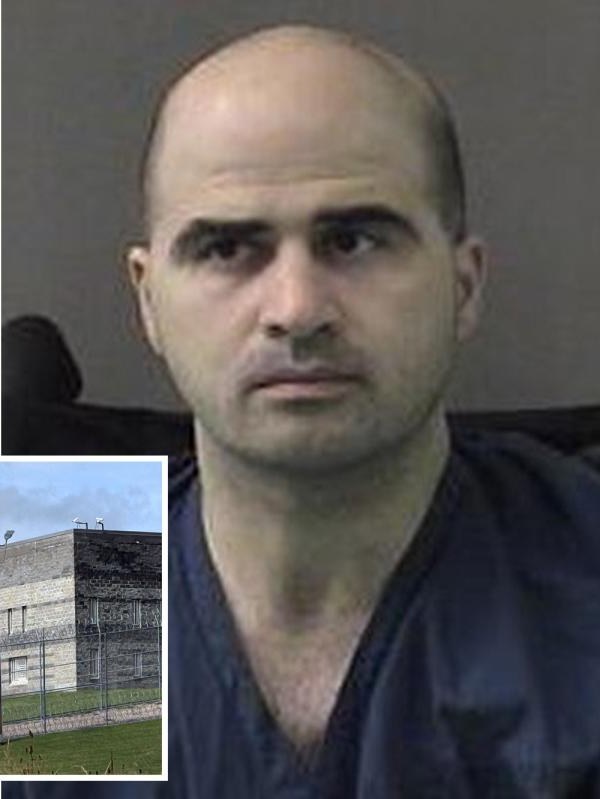
Convicted and sentenced to death. A military court-martial convicted Hasan of the 2009 Fort Hood shooting that killed 13 people and sentenced him to death at his 2013 trial. His conviction and sentence are final court findings, not allegations — but his fight against the December 3, 2026 execution is unresolved: the stay motion described here was pending before a federal judge as of this writing, with a hearing underway the morning of November 25.
Introduction
Nidal Malik Hasan is a former United States Army major and psychiatrist who opened fire on fellow soldiers at Fort Hood, Texas, on November 5, 2009, killing 13 people and wounding more than 30; he was convicted by court-martial at his 2013 trial and sentenced to death, and he has been confined on military death row at Fort Leavenworth, Kansas, ever since. Hasan — who was shot and left paralyzed by the soldiers who stopped his rampage — is now fighting the government’s plan to execute him by firing squad at Fort Hood on December 3, 2026, an order issued under President Trump in October that would make him the first American service member put to death by the Army since World War II. On November 24, 2026, he asked a federal court in Kansas to stay the execution while he prepares a constitutional challenge, moving the case into a hearing before U.S. District Judge Tony Mattivi the very next morning.
Background Information
Hasan was an Army psychiatrist who treated soldiers returning from Iraq and Afghanistan at Fort Hood when, according to reporting on the case, he carried out the November 5, 2009 attack on the Texas base, firing on the soldiers gathered in a building crowded with troops newly returned from deployment and others preparing to leave. He was paralyzed after two responding service members shot him as they moved to halt the rampage, and he now requires a wheelchair. At his 2013 court-martial, the judge barred Hasan — who had dismissed his lawyers and represented himself — from arguing that his actions were legally justifiable as “defense of others” on behalf of the Afghan Taliban; he rested his case without calling a single witness and made no closing argument, a silence that convinced his standby counsel his only goal was a death sentence. The military called nearly 90 witnesses; Hasan was convicted of premeditated murder and attempted murder and sentenced to death, and he is one of four people on the military’s death row at Fort Leavenworth.
The Controversy or Incident That Led to Their Cancellation
The attack unfolded on November 5, 2009, in a building survivor Kathy Platoni described as crowded with soldiers who had returned from deployment and others preparing to leave, when Hasan opened fire, killing 13 people and wounding more than 30 before two service members shot him, halting the rampage but leaving him paralyzed. Survivors have spent years pushing officials to redefine the shooting as an act of domestic terrorism rather than the “workplace violence” label it carried, arguing the military’s framing erased what the attack was. In October 2026, following an order from President Trump, Army and Pentagon officials announced the execution — the first military execution since 1961 and the first by firing squad since World War II. Defense Secretary Pete Hegseth then declared the shooting would be livestreamed before the plan was scrapped amid outcry. Army officials set the firing-squad execution for 1 p.m. on December 3, 2026, at Fort Hood — around the time of day the attack occurred thirteen years earlier.
On November 24, 2026, Hasan filed a motion for a stay of execution in U.S. District Court in Kansas — the civilian district where he is held at Fort Leavenworth — signing the filing himself and stating he “intends to demonstrate that the military court’s judgment and his resulting sentence of death were obtained and are maintained in violation of his federal constitutional and statutory rights.” The stay request, filed on his behalf by the ACLU of Kansas, says Hasan again intends to represent himself while lawyers from the ACLU Capital Punishment Project assist him, and that his habeas corpus petition will argue the denial of his “defense of others” rationale at trial violated his rights. Judge Tony Mattivi — a Trump nominee confirmed in June, who served from 2009 to 2013 as the lead prosecutor of the capital military commission against the USS Cole bombing’s mastermind — ordered a hearing on the motion for the morning of November 25, and the filing has the potential to delay the execution for months or years while the case plays out. Military experts told NBC News the habeas maneuver would all but assure the case is tied up in review well beyond the end of Trump’s term.
Public Reaction and Consequences
The legal filing landed amid raw feeling among the survivors the execution was meant to close out. On November 10, the Army told three survivors they could not attend the execution because none was the direct victim of the charges against Hasan, citing regulations governing military executions; an email sent Tuesday and shared with recipients by The Associated Press said military officials rejected their reconsideration request, citing security and space issues, and a letter signed by the commandant of Fort Leavenworth told the three they could not appeal again — “this is not meant as a judgment on any emotional injury you or others suffered as a result of CP Hasan’s crimes,” it said. Retired Col. Kathy Platoni, who would have been Hasan’s supervisor during a planned deployment to Afghanistan, said the denial felt like a betrayal: “I would desperately like to attend. To look Hasan in the eye and say, ‘You didn’t get me.’” Julia Wilson, who was nine months pregnant when Hasan opened fire, said her witness request was also denied, and that “we have faced institutional betrayal after institutional betrayal”; she added, “We remain on that battlefield because of that … if they don’t fix it, we’re never going to leave that battlefield.” The military told victims and survivors that about 160 witnesses would be allowed at the execution, and Platoni said through her work with survivors that she believed about 90 people had decided to go. Retired Maj. C. Alan Hopewell, who testified at Hasan’s trial, said one of the officers who shot Hasan had asked him to accompany her to the execution — “I’m disappointed that our status as victims is not recognized,” he said Tuesday. Hopewell, Platoni and Wilson said they will keep pressing for the Fort Hood shooting to be redefined as an act of domestic terrorism instead of workplace violence. On the other side, ACLU Capital Punishment Project deputy director Anna Arceneaux said in a statement that “the gravity of that loss does not change the government’s obligation to uphold the principles that define our justice system,” urging the court to stop the government from bypassing Hasan’s due-process rights “in its rush to carry out this execution.”
Current Status
As of this writing Hasan’s execution has not been carried out and his case is in active federal litigation. The stay motion was heard by Judge Mattivi in the District of Kansas on the morning of November 25, 2026, days before the scheduled December 3 firing-squad execution at Fort Hood. Hasan remains sentenced to death and confined at Fort Leavenworth; the ACLU’s filing asks the court to halt the execution so his habeas petition — which he will pursue largely as his own lawyer, with ACLU Capital Punishment Project attorneys assisting and a federal capital habeas unit from the Western District of North Carolina helping — can be heard in full. No court had ruled on the stay when the case’s coverage went to press, and the Pentagon did not immediately respond to requests for comment on the filing.
Impact on Their Career/Life
There is no career left to measure: Hasan’s Army career ended with the shooting and the court-martial that followed, and the only question left in his life is the date and manner of his death. The 2026 litigation has already reshaped how that end will be remembered — the first firing-squad execution any American soldier has faced since World War II, initially planned for public livestream and then withdrawn, now held up in civilian court by the condemned man’s own filing while the survivors he orphaned and wounded organize to watch. The fight over the last word extends to the attack’s very label: the survivors’ long push to have the massacre called domestic terrorism rather than workplace violence remains undecided alongside the execution itself.
Sources
New York Post, “Fort Hood shooter Nidal Hasan asks judge to stop execution” (Nov. 25, 2026) — source
CNN, “Fort Hood mass shooter asks judge to halt firing-squad execution set for next week” (Nov. 24, 2026) — source
NBC News, “Fort Hood mass shooter makes legal move to stop Pentagon’s firing squad execution” (Nov. 24, 2026) — source
Military.com, “Court to Hear Fort Hood Shooter Nidal Hasan’s Plea Wednesday to Delay Dec. 3 Execution” (Nov. 25, 2026) — source